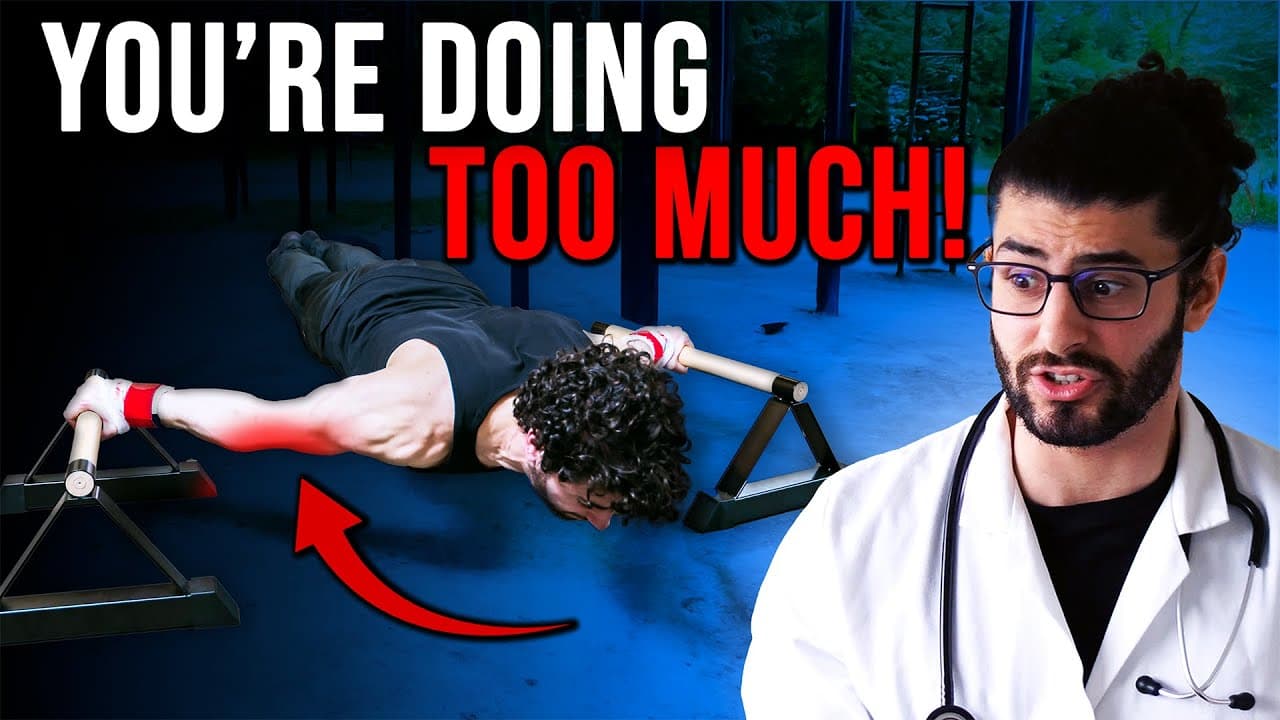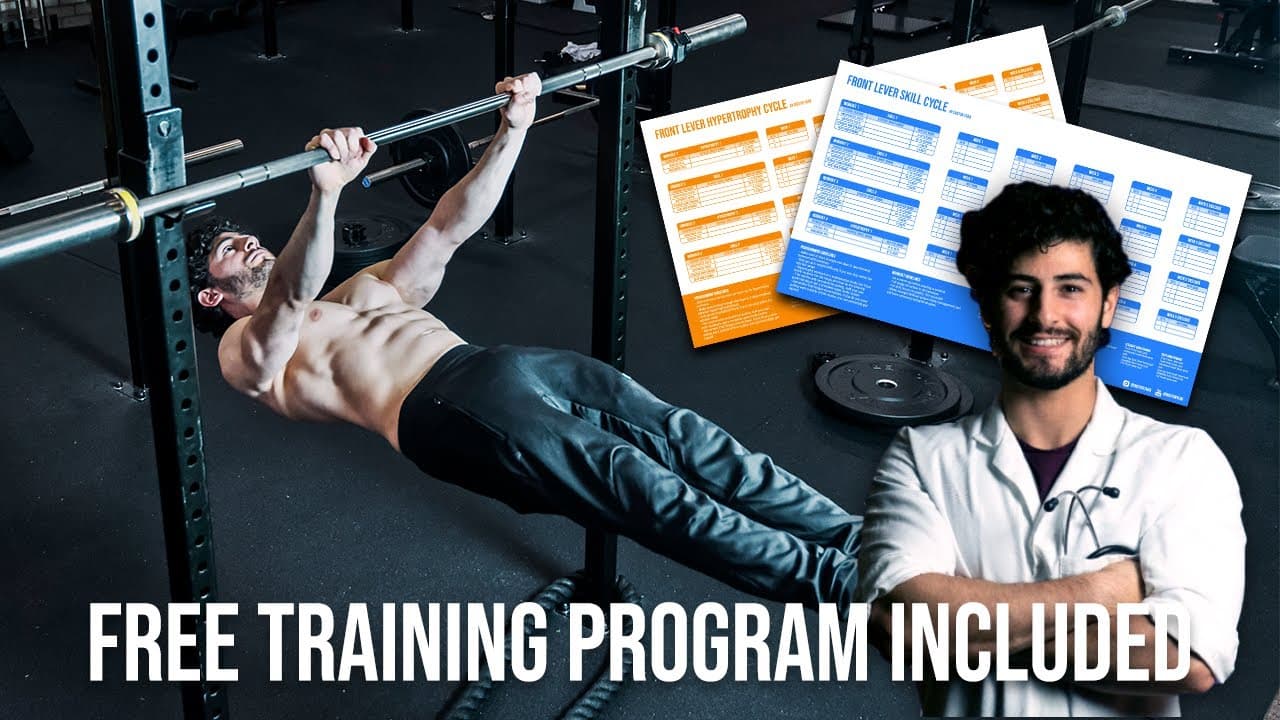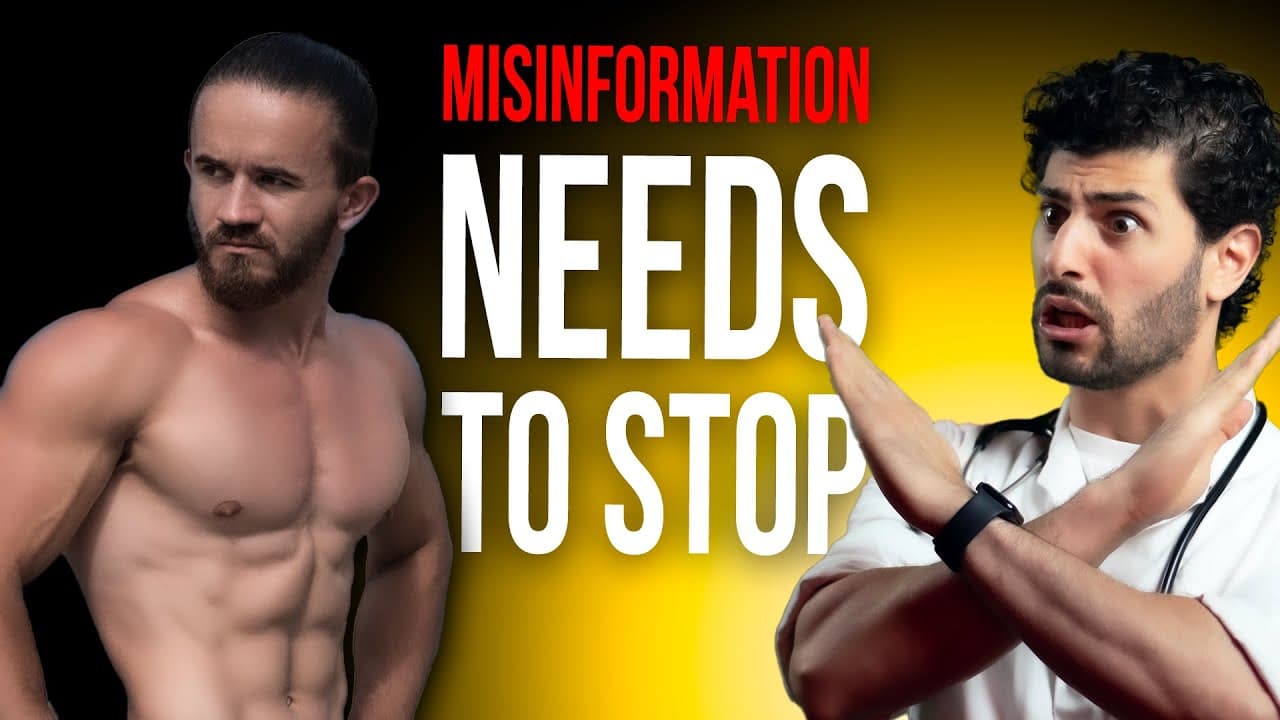

Calisthenics influencers are everywhere. Scroll through Instagram or TikTok for five minutes and someone is telling you the secret to unlocking your first muscle-up, fixing your planche, or recovering from a biceps injury in record time. But how much of this advice actually holds up under scrutiny? As a medical doctor and a calisthenics athlete with over 15 years of experience, I decided to put some of the most popular calisthenics content to the test. The result is an honest, sometimes brutal, and always educational breakdown of what the influencers get right and what they get dangerously wrong.
The Biceps Injury Recovery That Missed the Mark
The first video under my microscope came from a creator who claimed to have recovered from a biceps injury in just two weeks using total rest followed by gradual loading. I immediately zeroed in on a critical flaw: the creator never specified the type of injury. Was it a proximal tear? A distal tear? A partial tear, a tendinopathy, or simply a strain? Each of these conditions requires a fundamentally different approach to treatment and rehabilitation.
The two-week recovery timeline suggests it was likely nothing too serious, but the real issue lies in the recommended approach. The creator advocated for total rest in the first few days, which directly contradicts the advice of leading tendon researchers. I reference my podcast with Professor Keith Baar, a world-renowned expert on tendon and muscle injuries at UC Davis, who strongly advises against immobilization after non-surgical injuries. Instead, the research supports immediately loading the tendon with very light isometric contractions, such as holding a light weight for 30 seconds. This works as an anti-inflammatory mechanism and actually strengthens the injured tissue.
The science is striking: after just three days of immobilization, collagen content in a tendon can decrease by 10 to 15 percent. That is a significant setback that could have been entirely avoided. The creator also mentioned increasing carbohydrate intake during recovery, which I acknowledge is reasonable if it means entering a caloric surplus. However, the real nutritional priority should be protein intake, and specifically collagen combined with vitamin C, which has been shown to support connective tissue repair.
Shoulder External Rotation in Planche: A Friend Gets It (Mostly) Right
Next up was a video from Andry Strong, a well-known calisthenics athlete and a personal friend of mine. Despite the friendship, I made it clear that nobody gets a free pass when it comes to spreading information about movement science. Andry's video focused on the importance of shoulder external rotation during the planche, arguing that it helps activate the lats and chest more effectively, ultimately improving protraction.
I agree that the overall advice is excellent and I even credit Andry with teaching me this cue in person, noting that it significantly improved my own planche. However, I want to add an important anatomical nuance: the lats and pecs are not actually responsible for external rotation. They are internal rotators. The reason external rotation still activates these muscles is that the movement is typically accompanied by shoulder adduction (bringing the elbows toward the body) and slight shoulder extension. These secondary movements are what actually engage the lats and pecs to a greater degree.
This is a perfect example of a cue that works brilliantly in practice even though the anatomical explanation behind it is slightly off. The takeaway for athletes is that external rotation during planche is a legitimate technique improvement, but understanding the real mechanics behind it leads to even better application.
The Stretch Reflex and the Silent Kip
One of the more educational segments involved a creator explaining what he calls the silent kip, a technique for generating more explosive power at the start of a pull-up. The method involves dropping out of an active dead hang to elongate the muscles, then immediately rebounding upward to take advantage of the stretch reflex.
I can confirm that this is solid biomechanics. The stretch reflex, also known as the stretch-shortening cycle, works like an elastic band. When a muscle is rapidly elongated before contraction, it stores elastic potential energy that can be released to produce a more powerful movement. This principle is well-established in exercise science and applies to everything from vertical jumps to Olympic lifts.
What makes this particularly interesting for competitive athletes is that organizations like Final Rep, which hosts street lifting world championships, actually ban the stretch reflex during pull-up repetitions. For many competitors entering these events for the first time, eliminating this deeply ingrained movement pattern is one of the hardest adjustments they have to make.
The One-Arm Pull-Up Oversimplification
If there was one video that truly tested my patience, it was a creator claiming that the secret to achieving a one-arm pull-up is simply holding an isometric position for 10 seconds. That is the entire tutorial. Hold for 10 seconds and congratulations, you can do a one-arm pull-up.
I have been developing a comprehensive one-arm pull-up tutorial for months involving anatomy research, progressive programming, and safety protocols, so I was understandably frustrated. The one-arm pull-up is one of the most demanding movements in calisthenics. It requires immense lat strength, grip strength, biceps tendon resilience, scapular stability, and years of progressive training. The idea that a single isometric hold can predict or produce this ability is, to put it diplomatically, wildly incomplete.
This kind of oversimplification is not just unhelpful; it is potentially dangerous. Athletes who attempt one-arm pull-ups without proper preparation risk serious injuries, particularly to the biceps tendon and elbow joint. The movement demands careful, long-term progression that simply cannot be captured in a 15-second clip.
Why Source Credibility Matters in Fitness Content
A recurring theme throughout my analysis is the importance of specificity and context. Good fitness advice is rarely universal. A biceps recovery protocol depends entirely on the type and severity of the injury. A planche cue depends on the athlete's current level and body mechanics. Even a pull-up technique depends on competitive context.
The problem with social media fitness content is that it rewards simplicity and confidence over nuance and accuracy. A bold claim like recover in two weeks or hold for 10 seconds generates far more engagement than a detailed explanation of tendon biomechanics. But for the athletes actually trying to implement this advice, the details matter enormously.
My background as both a medical professional and an elite-level calisthenics athlete gives me a rare vantage point. I understand the anatomy, the physiology, and the lived experience of training these movements for over a decade. That combination allows me to identify not just what is wrong with a piece of advice, but precisely why it is wrong and what should be done instead.
Key Takeaways
- •Never immobilize a non-surgical injury. Light isometric loading immediately after injury helps maintain collagen content and speeds recovery.
- •Collagen plus vitamin C is more beneficial for tendon recovery than simply increasing carbohydrate intake.
- •Shoulder external rotation during planche works as a cue, but the real mechanism involves shoulder adduction and extension activating the lats and pecs.
- •The stretch reflex is a legitimate biomechanical principle that can improve pull-up explosiveness, and competitive organizations regulate its use.
- •One-arm pull-ups require years of progressive training. No single isometric hold can replace comprehensive preparation.
- •Always consider the specificity and context behind fitness advice. What works for one injury or one athlete may not apply to another.
The fitness influencer space is not going away, and that is not necessarily a bad thing. Social media has introduced millions of people to calisthenics who might never have discovered the sport otherwise. But viewers owe it to themselves to think critically about the advice they consume. When a creator claims a miracle recovery or a one-step shortcut, the appropriate response is not excitement. It is skepticism. And when someone with real clinical and athletic expertise takes the time to separate fact from fiction, it is worth paying attention.