
If there's one question I get more than any other, it's this: 'How do I structure a calisthenics program?' And honestly, I understand the confusion. The calisthenics world is full of conflicting advice. Some people say train every day, others say three times a week. Some focus on skills, others on hypertrophy. Everyone has an opinion. So let me share my personal approach after 15+ years of training, a medical degree, and more trial and error than I care to admit. This is how I structure a calisthenics program that builds strength, develops skills, and keeps you injury-free.
The Three Pillars: Strength, Skills, and Recovery
Every calisthenics program worth its salt needs to address three things: raw strength, skill development, and recovery. Most people overinvest in one or two of these and completely ignore the third. When I was younger, I was all strength and skills with zero attention to recovery. The result? Two significant shoulder injuries, chronic wrist pain, and a period where I had to take months off training entirely. As a medical professional now, I cringe at how I treated my body. Don't make my mistakes.
Strength means progressive overload on fundamental movements: pull-ups, dips, push-ups, rows, squats. These are the engine that powers everything. Skills mean dedicated practice on the movements you're chasing, handstands, planche, front lever, muscle-ups, whatever your goals are. Recovery means sleep, nutrition, mobility work, and programmed rest days. All three pillars get equal attention in my programming, and that balance is what's kept me healthy and progressing for over a decade.
My Weekly Template
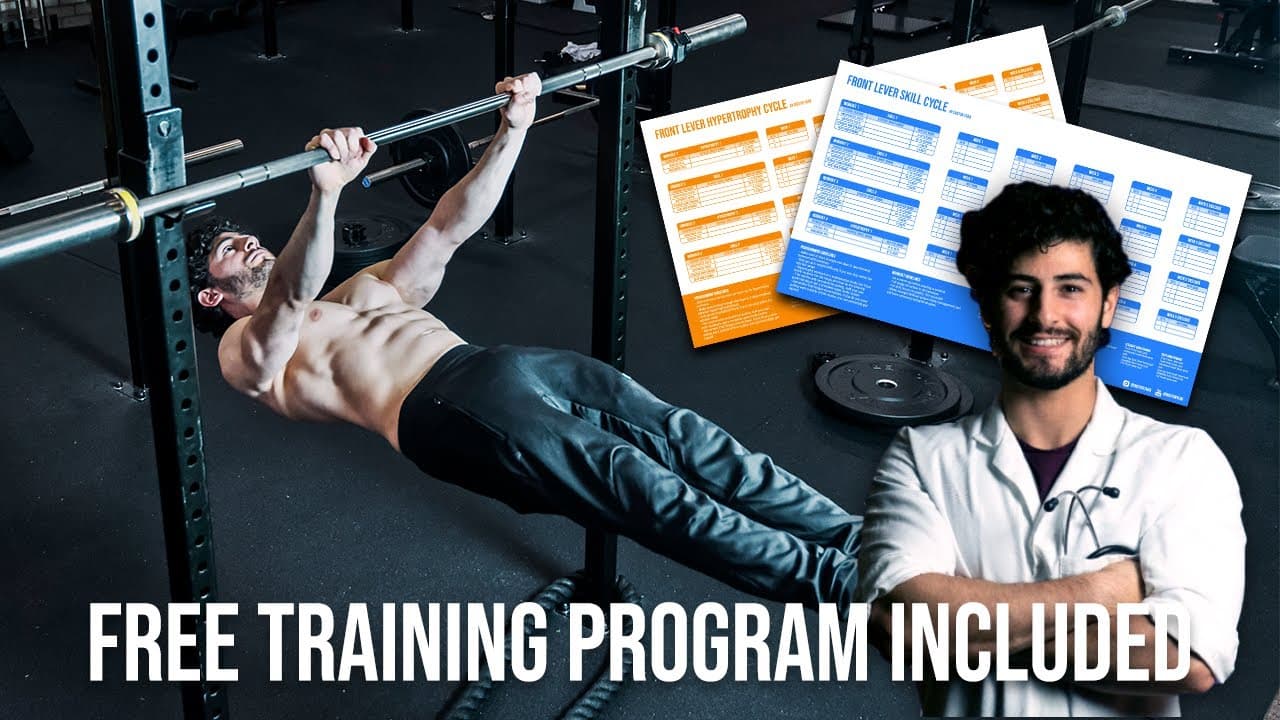
I train five days per week: three upper body sessions and two lower body sessions. Here's the template. Monday: Upper Push + Skill (planche work, weighted dips, pseudo planche push-ups, handstand practice). Tuesday: Lower Body (weighted squats, Nordic curls, calf raises, pistol squat progressions). Wednesday: Upper Pull + Skill (front lever work, weighted pull-ups, rows, muscle-up practice). Thursday: Rest or active recovery (light mobility, walking, maybe some easy skill practice). Friday: Upper Push + Pull (moderate intensity, focus on volume, ring dips, pull-ups, push-up variations, face pulls). Saturday: Lower Body + Core (deadlifts, lunges, hanging leg raises, L-sit holds). Sunday: Full rest.
This template balances push and pull, gives each movement pattern adequate frequency and recovery, and reserves dedicated time for skill work. The key is that skill work comes first in the session when you're freshest. Never bury skill practice at the end of a workout when you're fatigued. That's how you ingrain sloppy patterns.
Progressive Overload Without Weights (And With)
Calisthenics athletes sometimes fall into the trap of thinking progressive overload doesn't apply to them. It absolutely does. It just looks different. In the gym, you add 2.5 kg to the bar. In calisthenics, you progress through harder variations, add reps, extend hold times, slow down tempos, reduce rest periods, or add external load.
I use a combination approach. For fundamental movements like pull-ups and dips, I add weight. There's no calisthenics rule that says you can't hang a plate from a belt. My current weighted pull-up is bodyweight plus 45 kg for a triple, and that raw pulling strength is what supports my front lever and muscle-up. For skill-specific work, I progress through standard calisthenics progressions: tuck to advanced tuck to straddle to full. For hypertrophy-focused accessories, I manipulate volume and tempo.
The principle is simple: every session should be slightly harder than the last. Not dramatically harder, just enough to force adaptation. If last week you did 4 sets of 6 weighted pull-ups at +30 kg, this week try 4 sets of 7, or 4 sets of 6 at +32.5 kg. Small, consistent increases compound into massive progress over months and years.
The Injury Prevention Layer
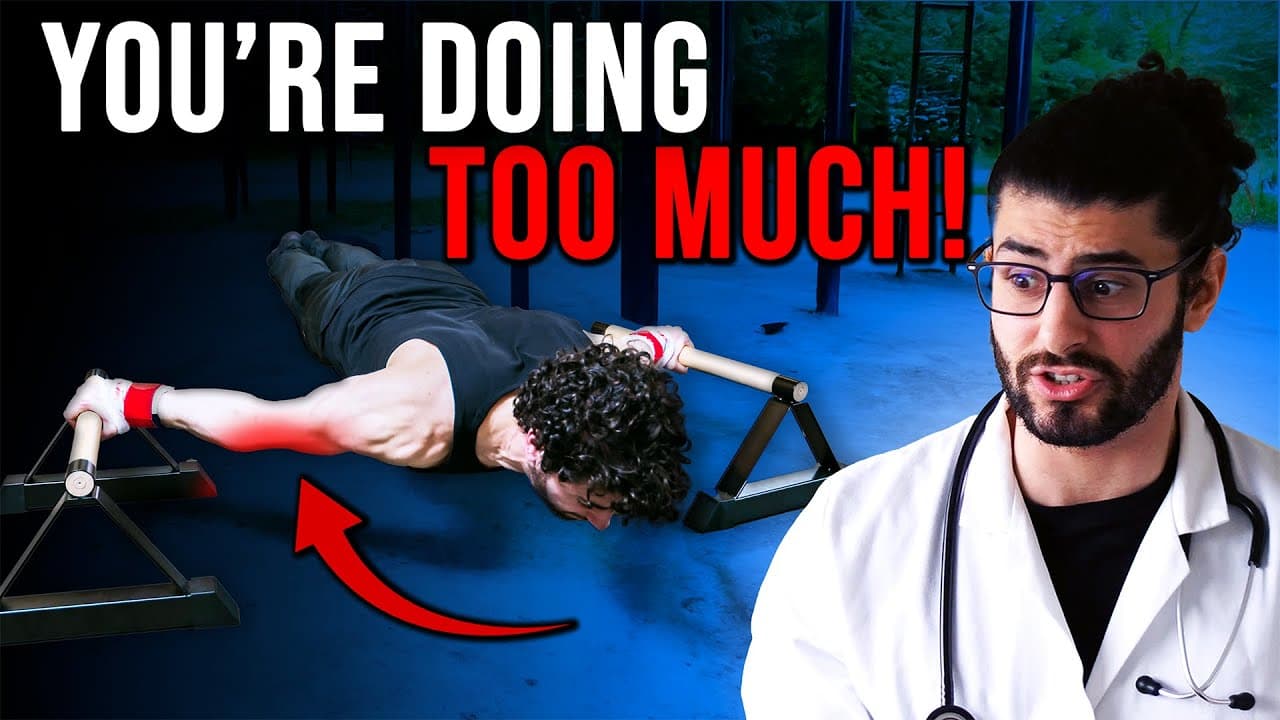
This is where my medical background gives me an edge, and it's the section I wish every calisthenics athlete would take seriously. Calisthenics is hard on joints. The wrists, elbows, and shoulders take a beating, and the most common career-ending injuries in our sport are tendinopathies, overuse injuries to tendons that can take 6-12 months to resolve.
My non-negotiable prehab routine: wrist circles and wrist extensions before every session (2 minutes). Band external rotations for rotator cuff health (2 sets of 15). Scapular push-ups and pull-ups for shoulder blade control (2 sets of 10 each). Elbow flexor and extensor work with a light resistance band (1 minute). Total time: about 8 minutes. I do this before every single session, no exceptions.
Beyond prehab, I follow three rules for injury prevention. First, never increase volume and intensity in the same week. Pick one. Second, take a deload week every 4-6 weeks where you reduce volume by 40-50%. Third, if something hurts beyond normal training soreness, sharp pain, joint pain, pain that worsens during the session, stop immediately. Not after the set. Not after the exercise. Immediately. Pushing through pain is how acute issues become chronic ones.
Programming Skill Work: The Art of Patience
Skill development in calisthenics requires a fundamentally different approach than strength training. Strength responds to high effort and progressive overload. Skills respond to high frequency and low fatigue. This is why I separate my skill blocks from my strength blocks within each session, and why I use Grease the Groove for my priority skill.
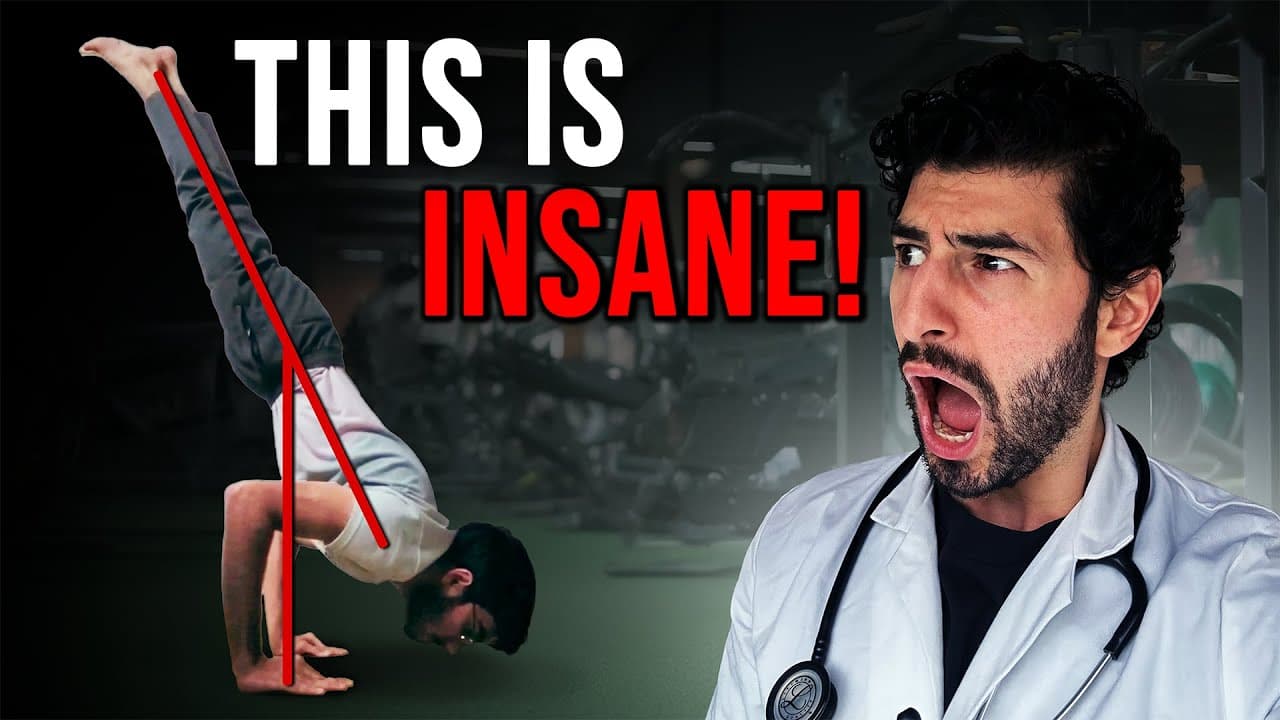
Currently, my priority skill is the full planche. So I do dedicated planche work at the start of my push sessions (when I'm freshest) and practice planche leans and light holds throughout the day using GTG. My secondary skill, the handstand, gets 10-15 minutes of practice at the end of sessions, plus freestanding attempts whenever I have a spare moment. This approach, one priority skill with dedicated focus, secondary skills with maintenance-level practice, prevents the common pitfall of trying to improve everything at once and improving nothing.
Nutrition: The Overlooked Variable
I'm not going to give you a detailed meal plan because nutrition is highly individual, but I will share the principles I follow. Protein: 1.8-2.2 grams per kilogram of bodyweight, non-negotiable. This is what the evidence supports for muscle protein synthesis in strength athletes. Calories: enough to support training and recovery without excessive fat gain. For most calisthenics athletes, maintenance calories or a slight surplus is ideal unless you're specifically trying to cut weight for skills. Timing: I eat my largest meal after training, with a focus on protein and carbohydrates for recovery. Simple, effective, sustainable.
As a Kurdish-Dutch guy, my diet is a fusion. My mom's Kurdish cooking, rich in vegetables, legumes, grilled meats, and olive oil, actually aligns really well with sports nutrition principles. I grew up on dolma, grilled chicken, lentil soups, and fresh salads, and that foundation still forms the core of my diet. You don't need to eat 'clean' by Western fitness standards. You need to eat enough protein, enough total calories, and enough micronutrients. However your culture's cuisine achieves that is perfectly fine.
Key Takeaways
- •Structure your program around three pillars: strength (fundamental movement overload), skills (high-frequency, low-fatigue practice), and recovery (sleep, nutrition, deload weeks)
- •Train 4-5 days per week with dedicated push, pull, and lower body sessions. Always place skill work first when you're freshest
- •Progressive overload in calisthenics means harder progressions, added reps, extended holds, slower tempos, or added external weight
- •Eight minutes of prehab before every session is the best injury insurance you can buy. Wrists, shoulders, and elbows need dedicated attention
- •Never increase both volume and intensity in the same week, and deload every 4-6 weeks
- •Focus on one priority skill at a time with dedicated session work plus daily Grease the Groove practice
- •Protein intake of 1.8-2.2 g/kg bodyweight supports the demands of calisthenics training regardless of your dietary tradition
Build Your Own Program
Use this article as a framework, not a prescription. Your program should reflect your goals, your schedule, your current level, and your injury history. The principles are universal, progressive overload, balanced push and pull, skill prioritization, recovery, and prehab, but the specific exercises and volumes should be tailored to you. Start with the template I shared, run it for 4-6 weeks, track your progress, and adjust based on what you learn. That's how you build a calisthenics program that lasts, not just for months, but for years.