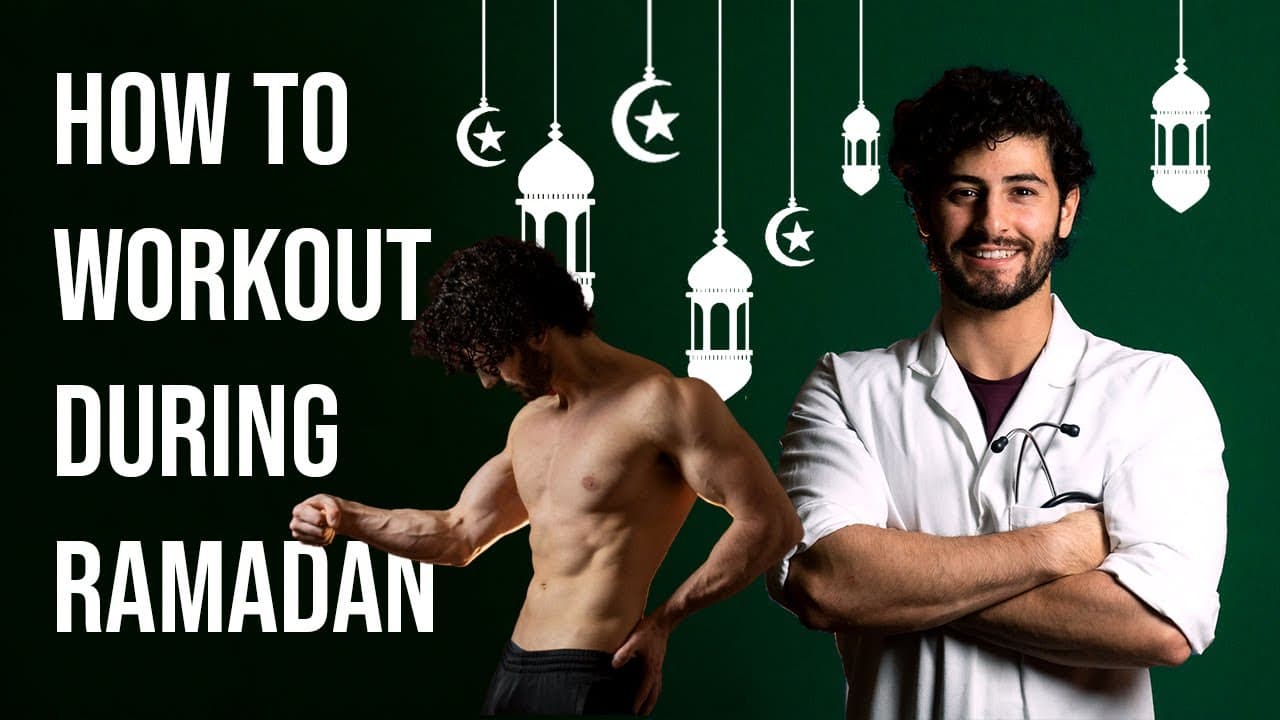

Ramadan Mubarak everyone! Every year, without fail, my inbox explodes with the same question: "Doctor Yaad, how do I keep training during Ramadan without losing all my progress?" As someone who has fasted every Ramadan since childhood and trained calisthenics through every single one for over fourteen years, I've developed a system that works. Not just theoretically -- I'm talking about a battle-tested approach from someone who has lived this reality as both a fasting athlete and a medical doctor. Let me walk you through exactly how I approach training during the holy month.
The Mindset Shift You Need to Make
Before we get into the nuts and bolts, I need you to internalize one thing: Ramadan is not your hypertrophy block. It's not your peaking phase. It's not the month to chase new PRs or unlock your first muscle-up. It is a maintenance and spiritual growth period. Once you accept that, everything else becomes easier. You stop fighting against the fast and start working with it. I've seen athletes try to maintain their full training volume during Ramadan and end up injured, burnt out, or sick by week three. Don't be that person. Your gains are not going to evaporate in thirty days if you train smart.
The Physiology of Fasting and Exercise
Let me put my doctor hat on for a moment. When you're fasting from sunrise to sunset -- which in Northern Europe where I live can mean sixteen to eighteen hours without food or water -- your body undergoes several physiological changes that directly affect training. Glycogen stores deplete progressively throughout the day. By afternoon, you're relying more heavily on fat oxidation for energy, which is less efficient for high-intensity work. Dehydration accumulates, which impairs thermoregulation, cognitive function, and muscular endurance. Cortisol levels peak in the late afternoon. And your sleep architecture is disrupted because of suhoor and taraweeh prayers. All of this means your performance ceiling is genuinely lower during Ramadan. This is not weakness -- it's basic physiology. Work within these constraints, not against them.
Choosing Your Training Window
I've experimented with every possible training time over the years, and here's what I've landed on. My preferred window is thirty to sixty minutes before iftar. Yes, this is when you feel the worst -- you're dehydrated, hungry, and low on energy. But the strategic advantage is massive: you finish your session, break your fast immediately, and start recovery right away. The workout itself might feel like a five out of ten, but the recovery is as good as it gets during Ramadan. My second choice is ninety minutes after iftar, once your initial meal has started digesting. You have fuel and hydration on board, which makes the session feel better. The trade-off is that you're training late at night and potentially cutting into already-limited sleep. I avoid training after suhoor because you then have the entire fasting day ahead with no ability to rehydrate. For calisthenics specifically, this is a bad combination -- dehydrated tendons and ligaments under load is asking for trouble.
Programming: What to Keep and What to Cut
Here's my Ramadan programming philosophy distilled into clear rules:
- •**Keep your key movements but reduce volume by 30-50%.** If you normally do 4 sets of front lever holds, do 2-3. If you do 5 sets of pull-ups, do 3.
- •**Maintain intensity on your top sets.** Don't drop weight or difficulty -- just do fewer sets. Intensity is what preserves muscle; volume is what drives growth. You're not trying to grow right now.
- •**Eliminate or drastically reduce accessories.** No one needs four biceps exercises during Ramadan. Pick one, do two sets, and move on.
- •**Prioritize skill work.** Handstand practice, L-sit holds, and movement flow sessions are perfect for Ramadan because they're neurally demanding but metabolically light. I do more handstand practice during Ramadan than any other month.
- •**Keep sessions under 45 minutes.** Anything longer and you're just accumulating fatigue without proportional benefit.
Nutrition Strategy for the Compressed Window
With only six to eight hours of eating window (depending on your latitude and time of year), meal planning becomes critical. Here's my template. At iftar, I start with three dates and two large glasses of water -- this is sunnah and also genuinely effective for rapid glucose and rehydration. After prayer, I eat my main meal: a large portion of protein (chicken, fish, eggs, or legumes), complex carbohydrates (rice, sweet potato, or whole grain bread), and a generous serving of cooked vegetables. About two hours later, I have a second smaller meal or a protein shake with fruit. At suhoor, I eat slow-digesting foods to sustain me through the fast: oats with peanut butter, eggs, cheese, and plenty of water. My total protein target is at least 1.6 grams per kilogram of bodyweight per day, which for me means around 130 grams spread across three eating occasions. Hitting this target is the single most important nutritional factor for preserving muscle during Ramadan.
Managing Sleep and Recovery
This is the often-overlooked piece. Between taraweeh prayers, suhoor, and Fajr, most people lose two to three hours of sleep during Ramadan. Chronic sleep deprivation impairs protein synthesis, increases injury risk, and kills your motivation to train. My strategy is simple: I nap. A twenty to thirty minute nap in the early afternoon does wonders for recovery and afternoon alertness. I also go to bed as soon as possible after taraweeh and set my suhoor alarm for the latest possible time. Every minute of sleep counts during this month.
What Happens After Ramadan
Here's the encouraging part: the rebound after Ramadan is real. In the first two to three weeks after Eid, as you return to normal eating, sleeping, and hydration patterns, you'll notice your strength coming back rapidly. This isn't new adaptation -- it's your body expressing the fitness it maintained during the fast, now with proper fuel and recovery. I typically feel stronger than my pre-Ramadan baseline within three to four weeks of returning to full training. So trust the process and know that the temporary dip is exactly that -- temporary.
Key Takeaways
- •Accept Ramadan as a maintenance phase and stop chasing progress during the fast
- •Train 30-60 minutes before iftar for optimal recovery timing
- •Reduce volume by 30-50% but maintain intensity on your key lifts and holds
- •Hit 1.6g/kg protein minimum across iftar, evening meal, and suhoor
- •Prioritize skill work and keep sessions under 45 minutes
- •Protect your sleep at all costs -- nap if possible and minimize late nights
- •Trust that your strength will rebound fully within 3-4 weeks after Eid
Final Thoughts
I love Ramadan. It reconnects me with my Kurdish heritage, my community, and my faith. And honestly, training through it has taught me more about discipline and self-awareness than any program ever could. You learn to listen to your body, to distinguish between genuine fatigue and laziness, and to find joy in movement even when conditions aren't perfect. Train smart, eat well during your windows, sleep as much as you can, and trust that your body knows what it's doing. Ramadan Kareem.