
One of my favorite things about running this community is getting to see what you all are working on. When I asked my viewers to submit their calisthenics form for review, the response was overwhelming, and honestly, a lot of you are stronger than me in certain movements. But strength without technique is a ticking time bomb, and today I'm breaking down the most common form issues I saw, the fixes for each, and what genuinely impressed me.
The Submissions Blew Me Away
Let me start by saying this: the level of dedication in this community is insane. I received hundreds of submissions, ranging from beginners working on their first pull-up to advanced athletes hitting muscle-ups and front levers. Every single person who submitted deserves respect for putting themselves out there. Filming your training and sending it to someone for critique takes guts. I remember being terrified of feedback early in my calisthenics journey, and here you all are, just throwing it out there. I love it.
After reviewing everything, I noticed clear patterns. The same mistakes kept showing up across different skill levels, which tells me these are systematic issues in how people learn calisthenics, not individual problems. So let me address the big ones.
Pull-Up Form: The Shoulder Shrug Epidemic
At least 70% of the pull-up submissions had the same issue: initiating the pull with a shoulder shrug instead of scapular depression. What this looks like is the shoulders shooting up toward the ears at the start of the pull, which means the upper traps are doing the initial work instead of the lats. This is inefficient, limits your pulling power, and over time can contribute to neck and upper trap tension.
The fix is simple but requires conscious practice. Before you pull, perform a scapular pull, depress your shoulder blades, pulling them down and slightly back. This engages your lats first and sets up the entire pulling chain correctly. I cue this as 'put your shoulders in your back pockets' before you bend your arms. Practice dead hang to active hang transitions (scapular pulls) as a standalone exercise until the pattern becomes automatic. I recommend 3 sets of 8-10 before your pull-up work.
Muscle-Up Form: The Chicken Wing
For those of you working on muscle-ups, the most common issue was the asymmetrical transition, one arm going over the bar before the other, creating what I affectionately call the chicken wing. This happens because of a strength imbalance between your dominant and non-dominant side, and because the explosive pull isn't high enough to allow a simultaneous transition.
My two-part fix: first, train single-arm pulling strength to equalize both sides. High pull-ups, archer pull-ups, and single-arm negatives will expose and correct the imbalance. Second, focus on pulling higher before the transition. If your pull-up is only getting your chin to bar height, the transition has to compensate with the chicken wing. You need chest-to-bar height at minimum. Work on explosive pull-ups and clapping pull-ups to build the power needed for a clean transition.
Handstand Form: The Banana Back
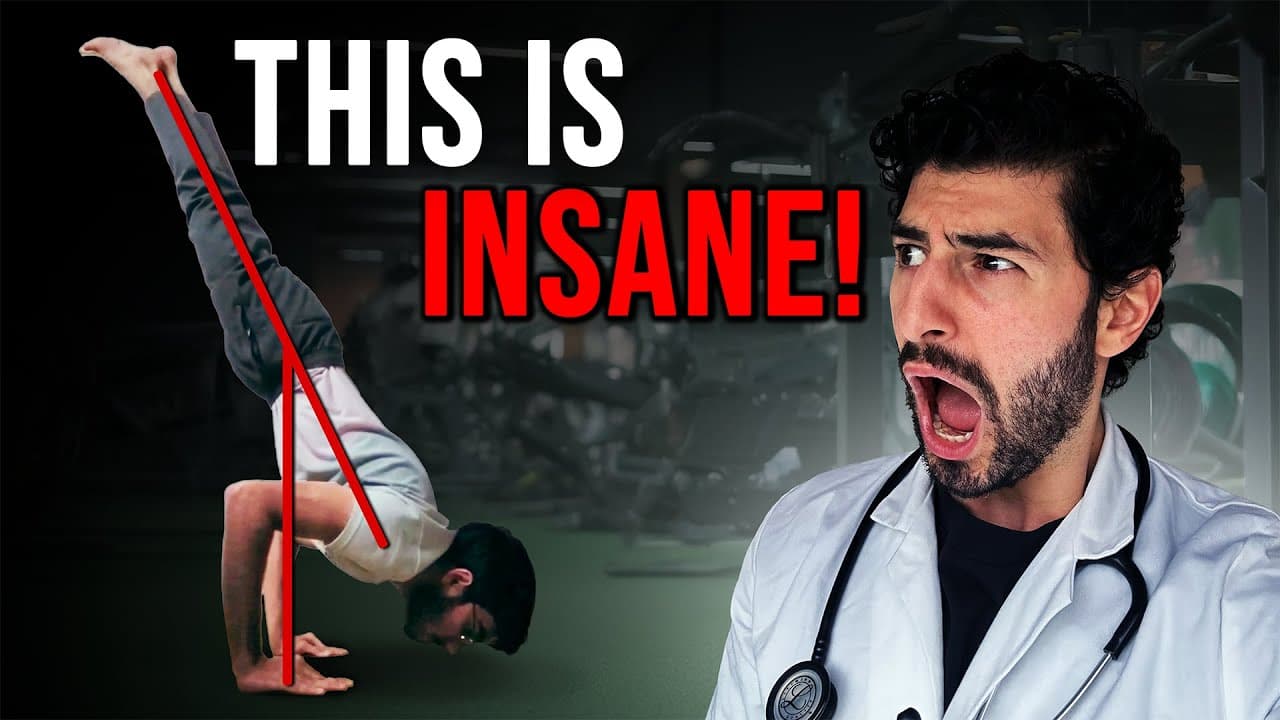
The handstand submissions were a mixed bag, but the single most common error was the banana back, excessive lumbar extension that makes you look like a curved banana when inverted. This happens because people arch their back to keep their balance instead of stacking their joints properly.
The fix starts on the ground. Practice hollow body holds until a perfectly flat back becomes second nature. Then transfer that hollow body position to the wall. Chest-to-wall handstands are excellent for this because the wall prevents you from arching. Focus on posteriorly tilting your pelvis (tucking your tailbone) and squeezing your glutes. Over time, this straight-body position should become your default. I spent months drilling chest-to-wall handstands before I could consistently hold a straight freestanding handstand, and it was worth every second.
Dip Form: The Forward Collapse
Several submissions showed dips where the athlete collapsed forward at the bottom of the movement, losing shoulder control and putting the anterior shoulder in a compromised position. As a doctor, this one makes me nervous because the bottom of a dip is where the shoulder is most vulnerable. If you collapse into the bottom position without muscular control, you're putting enormous stress on the anterior capsule and the biceps tendon.
The fix: slow eccentrics. Take 3-5 seconds to lower yourself into the bottom of the dip, maintaining active tension throughout. Stop at a depth where your shoulders are slightly below your elbows. Going deeper than that without adequate control is asking for trouble. If you can't control a 3-second negative, the dip is too advanced for you right now, and ring support holds and negative-only dips are your homework.
The Viewers Who Were Stronger Than Me
Now for the fun part. Several of you submitted movements that I genuinely cannot do or have never been able to do as cleanly. One viewer sent a 30-second Victorian cross hold that was textbook perfect. Another submitted a one-arm pull-up with form so smooth it looked effortless. And one absolute legend sent a 90-degree push-up hold that I've never even attempted seriously.
This is what I love about calisthenics. There's always someone out there who's better at something than you are. It keeps you humble, keeps you motivated, and reminds you that mastery is a lifelong pursuit. To those of you who submitted skills beyond my level: you're incredible, and you've genuinely inspired me to expand my own training.
General Patterns and Advice
Across all the submissions, I noticed three overarching themes. First, people tend to rush progressions. Moving to a harder variation before mastering the current one leads to compensatory patterns that become deeply ingrained habits. Second, people underinvest in the basics. Scapular control, hollow body strength, and wrist conditioning are boring but foundational. Third, people rarely film themselves. Of the hundreds who submitted, many told me it was the first time they'd ever recorded their training. Film yourself regularly. The camera doesn't lie, and you'll catch form issues that you can't feel.
Key Takeaways
- •Scapular depression before pulling is the single most impactful form fix for pull-ups. 'Shoulders in your back pockets'
- •Asymmetrical muscle-up transitions are caused by strength imbalances and insufficient pull height. Train single-arm work and explosive pulls
- •The banana back in handstands is fixed through hollow body training and chest-to-wall handstand practice
- •Dip depth should be controlled with slow eccentrics. Collapsing at the bottom risks anterior shoulder injury
- •Film your training regularly. Most people have no idea what their form actually looks like
- •Never stop learning from your community. Some of my viewers put my skills to shame, and that's a beautiful thing
Keep Submitting
This was one of the most rewarding pieces of content I've ever created. Seeing your training, your dedication, and your willingness to be critiqued publicly is genuinely inspiring. I'll be doing this again, so keep training, keep filming, and keep submitting. And to those of you who are stronger than me, I'm coming for you.