
The internet has a talent for turning mediocre movements into viral sensations, and the calisthenics corner of social media is no exception. From Bosu ball one-arm handstands to questionable dip advice and debatable planche drills, the line between legitimate coaching and engagement-farming content grows blurrier by the day. As a medical doctor with over 15 years of calisthenics experience, I recently sat down to dissect some of the most viral calisthenics clips circulating online. The results range from genuinely solid advice to content that deserves a medical intervention of its own.
The Dip Debate: When Cues Become Overcues
A video from the well-known channel Cali Move offered five tips for safe dips, starting with grip width selection. I agree that grip width matters but pushes back on the idea that shoulder width is universally optimal. Individual anatomy varies significantly: some athletes feel best slightly wider than shoulder width, others at exactly shoulder width. The key is experimentation rather than rigid prescription. I have performed his heaviest weighted dips at approximately 1.3 times shoulder width.
The more contentious point involves scapular retraction during the descent. Cali Move recommends retracting the shoulder blades to give the shoulder joint room to move. I argue this cue is context-dependent to the point of being misleading as universal advice. Street lifters typically protract and roll their shoulders forward during heavy dips. Chest-focused dips use a different shoulder position than tricep-focused dips. Applying a single retraction cue across all dip variations is an oversimplification that could actually cause problems.
This leads to a broader point that I emphasize repeatedly: overcuing. Athletes who stack too many technical instructions during a compound movement often override their body's natural movement intelligence. The human body already knows how to perform a dip safely if the load is appropriate. Layering cues like "protract here, retract there, elevate this, depress that" can create robotic, inefficient movement patterns that increase rather than decrease injury risk. Sometimes the best cue is the simplest one: go down, lean slightly forward, come back up.
The Bosu Ball Handstand Illusion
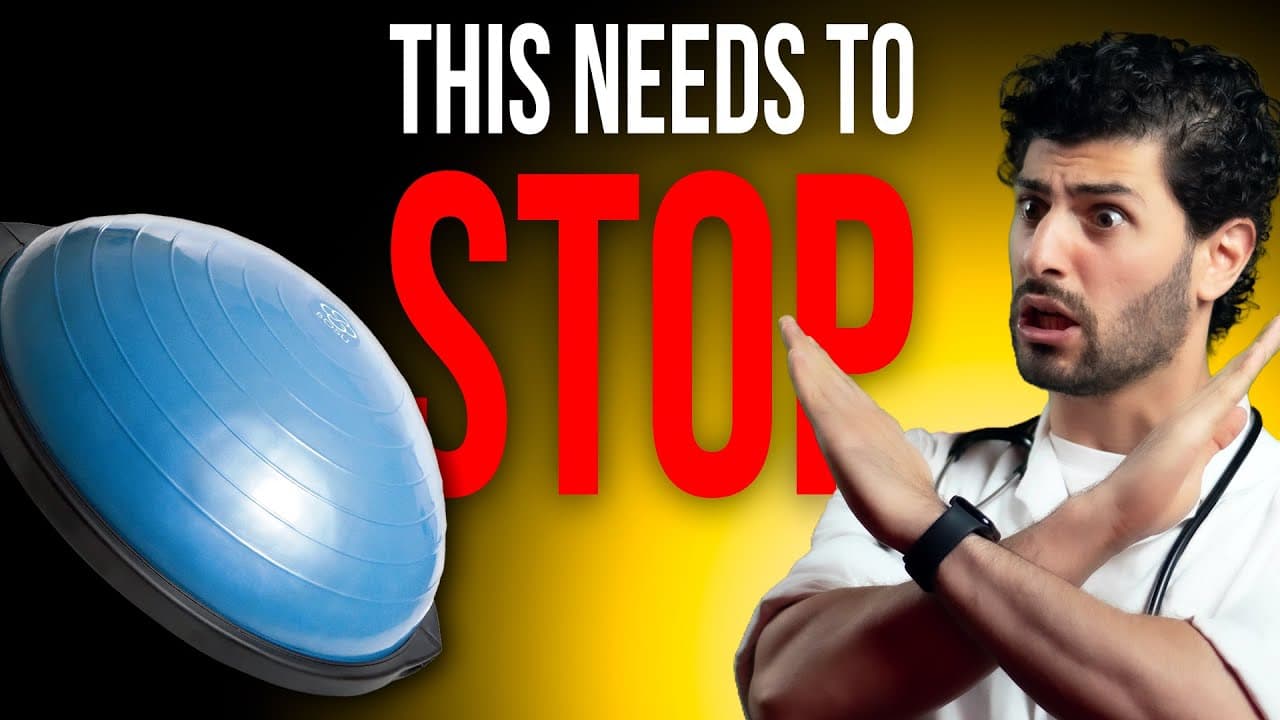
Few topics get me going quite like the viral Bosu ball one-arm handstand trend. A popular video claimed that an athlete learned the one-arm handstand in just three months, showcasing 14-second holds on a Bosu ball and smooth performances on parallettes. The implication was that this represented a genuine one-arm handstand achievement. My response is unequivocal: Bosu ball one-arm handstands are not comparable to floor one-arm handstands, and conflating the two does a disservice to athletes who spend years pursuing the real skill.
The biomechanical explanation is straightforward. In a floor one-arm handstand, balance is maintained through finger pressure, elbow adjustments, shoulder corrections, and finally full-body compensation for larger perturbations. It is an incredibly refined skill that demands years of proprioceptive development. On a Bosu ball, the athlete can simply shift the entire ball to correct balance. It is closer to holding a water bottle upside down and tilting the hand to keep it centered than to actual hand balancing.
I spent years developing a fully stacked, technically clean one-arm handstand on the floor, and I was able to hold a Bosu ball version for three to five seconds on his very first attempt, before he even had a proper one-arm handstand. The difficulty gap is enormous. Compounding the problem, most Bosu ball practitioners exhibit extreme upper back arching, which shifts the center of mass in a way that makes balancing dramatically easier while looking superficially impressive to untrained eyes.
The frustration, I admit, comes from followers constantly sending these clips with comments like "Look, this guy learned one-arm handstand in three months, why is it taking you so long?" The answer is that they are fundamentally different skills masquerading under the same name.
The Planche Forearm Exercise Controversy
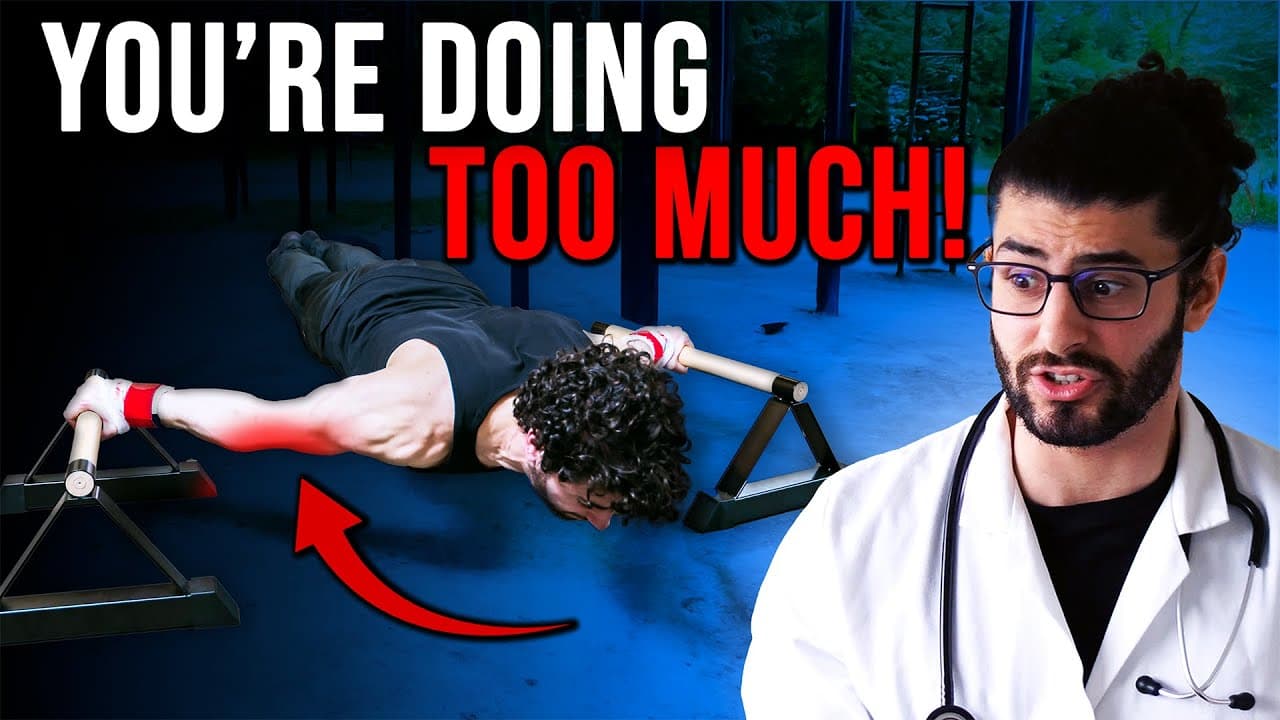
A spirited exchange between two calisthenics content creators caught my attention. One creator, Yoko Calisthenics, promoted a forearm planche lean exercise as a way to reach planche in half the time. Another creator, Olaf Calisthenics, responded that the exercise was essentially useless because it eliminated shoulder flexion, which he correctly identified as the primary movement in planche.
I land somewhere between the two positions. The shoulder, as I explain in the video, functions through three joint systems: the glenohumeral joint (responsible for shoulder flexion), the acromioclavicular joint (connecting the scapula to the clavicle), and the scapulothoracic joint (responsible for protraction, retraction, elevation, and depression). The forearm planche exercise does indeed remove the glenohumeral component. But it isolates protraction work in a way that can be extremely valuable, particularly for athletes dealing with wrist or elbow injuries who cannot perform standard planche leans.
The binary framing of "this exercise is bad" versus "this exercise halves your planche timeline" misses the point entirely. It is a specialized tool. It will not replace planche leans, and it certainly will not halve anyone's progression timeline. But as a protraction drill, a hollow body strengthener, or a rehabilitation exercise, it has a legitimate place in a well-designed program.
Understanding Overleaning in Planche
The final clip addressed the common problem of overleaning during planche holds. The original creator demonstrated the issue and offered useful corrections, but I add a crucial diagnostic step that most athletes overlook. The simplest way to determine whether a progression is too difficult is to film a hold and compare the first second to the last two seconds. If the lean angle has decreased significantly by the end, the progression is too hard.
I demonstrate this with his own footage. In an appropriate progression, a half-lay planche, his lean angle remains relatively consistent from start to finish. Protraction may fade slightly, but the lean itself stays stable. In a too-hard progression, a full planche, he starts with an aggressive lean that visibly decreases as fatigue sets in. The body is compensating for insufficient strength by shifting the center of mass backward.
This self-assessment technique is more reliable than subjective feel. Many athletes believe they are maintaining position when video reveals significant drift. Filming holds from a consistent angle and comparing frames is the cheapest, most effective coaching tool available to any solo practitioner.
The Bigger Problem with Fitness Social Media
Running through these clips reveals a pattern that I find concerning. Social media rewards absolute statements. "This exercise is useless" gets more engagement than "this exercise has specific applications within certain contexts." "Learn one-arm handstand in 3 months" generates more clicks than "develop Bosu ball balance in 3 months, which is a different and significantly easier skill." The platform incentivizes oversimplification, and oversimplification in fitness can lead to wasted time, frustration, and injury.
The antidote is context. Every exercise exists on a spectrum of usefulness that depends on the athlete's goals, injury history, training age, and anatomical profile. Athletes who develop the critical thinking skills to evaluate claims against their own experience will navigate social media effectively. Those who take every viral clip at face value will spend their training careers chasing shortcuts that do not exist.
Key Takeaways
- •Grip width and scapular positioning during dips should be individualized rather than prescribed universally
- •Overcuing compound movements can override natural movement patterns and increase injury risk
- •Bosu ball one-arm handstands are a fundamentally different and significantly easier skill than floor one-arm handstands
- •The forearm planche exercise has legitimate value as a protraction drill but will not dramatically accelerate planche progression
- •Filming holds and comparing the first and last seconds is the best way to assess whether a progression is too difficult
- •Social media rewards absolute claims and oversimplification, which can be dangerous when applied to fitness training
- •Context and individual anatomy should guide exercise selection more than viral content
The calisthenics community produces incredible content alongside questionable advice, often from the same creators in the same videos. my approach, informed by clinical training and over a decade of personal practice, offers a useful filter: ask what the exercise actually does biomechanically, who it is appropriate for, and whether the claim being made matches the movement being performed. That filter alone eliminates most of the noise.